Dirt calculator for Hawaii
Estimate fill dirt in cubic yards or tons for low areas, excavations, and grading, including an allowance for settling.
Enter your project dimensions
Settling can reduce loose fill dirt depth by 10-15%, especially after heavy rain. Ordering only enough for the measured excavation may leave the surface an inch or two below grade, so this calculator starts with a 10% settling allowance. Dry fill dirt weighs roughly 2,400 lb for each cubic yard, or 1.2 tons, and is sold by the yard. It is not meant for growing plants. Use the separate topsoil calculator for planting material.
How to measure a fill area
- Measure the length and width in feet, along with the average amount of elevation needed. For an uneven low area, compare its deepest spot with its shallow edge and use the midpoint.
- For a trench or hole, measure its length, width, and empty depth in feet, then multiply those dimensions.
- Convert cubic feet to yards by dividing by 27; multiply by 1.2 to calculate tons. Keep the settling allowance selected.
Tons = cubic yards × 1.2 · +10% for settling is on by default
Coverage and material weight
| Material | Weight per cubic yard | Tons per yard |
|---|---|---|
| Fill dirt (dry) | ≈ 2,400 lb | 1.20 |
| Fill dirt (wet) | up to 3,000 lb | 1.50 |
| Topsoil, for comparison | ≈ 2,200 lb | 1.10 |
| Depth of fill | 1 cubic yard covers | 5 yards cover |
|---|---|---|
| 2 inches | 162 sq ft | 810 sq ft |
| 4 inches | 81 sq ft | 405 sq ft |
| 6 inches | 54 sq ft | 270 sq ft |
| 12 inches | 27 sq ft | 135 sq ft |
Typical fill projects and yardage
| Project | Typical size | Depth | Volume | Weight |
|---|---|---|---|---|
| Raise a low lawn area | 20 x 20 ft | 4" | 4.9 yd³ | 5.9 tons |
| Level a settled depression | 15 x 15 ft, avg 6" | 6" | 4.2 yd³ | 5 tons |
| Backfill a utility trench | 25 ft x 2 ft | 18" | 2.8 yd³ | 3.3 tons |
| Build a landscape berm | 20 x 6 ft | 12" | 4.4 yd³ | 5.3 tons |
| Backfill along a foundation | 60 ft x 2 ft | 10" | 3.7 yd³ | 4.4 tons |
Fill dirt explained and its limits
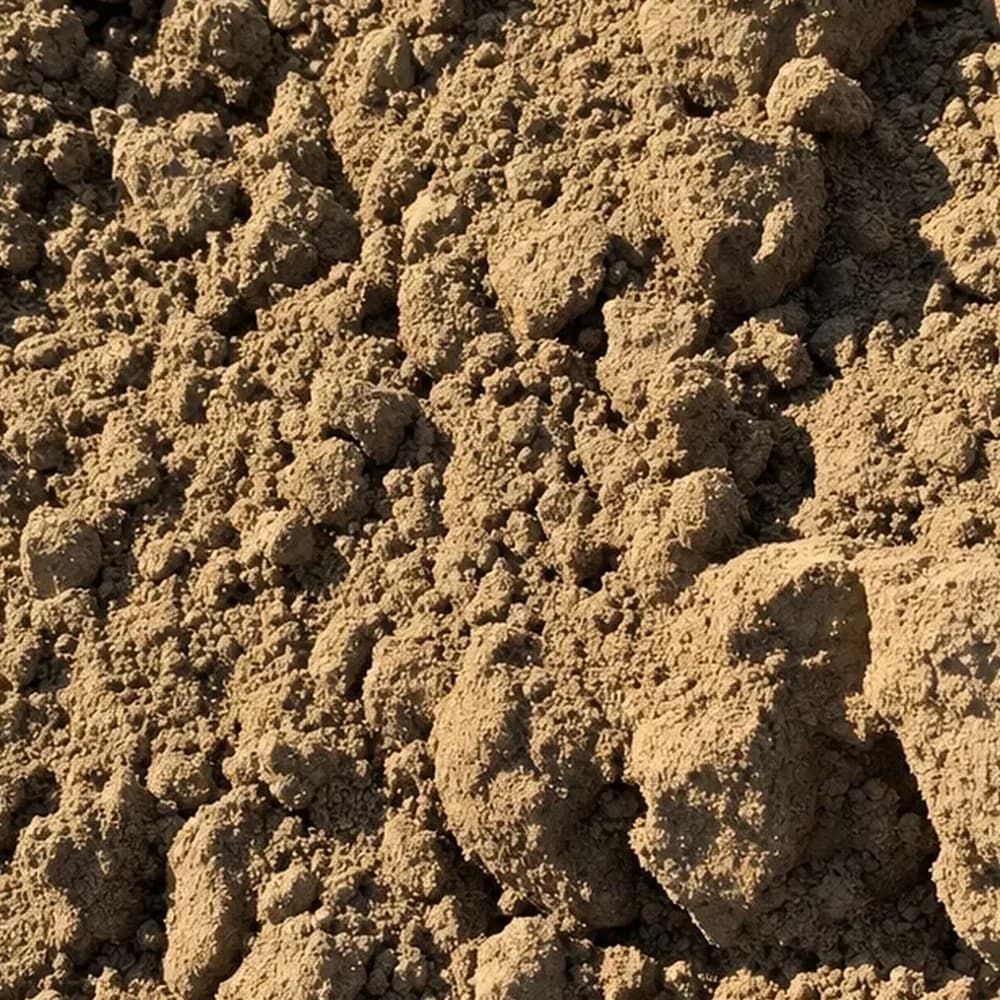
Fill dirt comes from subsoil, the mineral layer beneath topsoil, and is screened to remove debris and rock. It has little organic content because organic material breaks down and causes settlement. Use it for berms, trench backfill, filling holes, and changing grades. Where grass or vegetables are planned, add 4-6 inches of topsoil above the fill. Keep the structural layer fill dirt and use topsoil at the surface.
Plan for settling when ordering
Settlement often explains why a hole needs another load. Place dirt in 6 to 8 inch lifts, compacting every lift; at the least, soak each lift thoroughly and allow it to settle. For lawn patches, finish about a half-inch above grade so they settle level. Rain makes drainage especially relevant on wet windward sites. Fill beneath slabs or footings requires an engineer's specified compaction method, smaller lifts, and proper equipment. Do not bury organic material in fill, since wood can decay and leave a sinkhole after a five-year delay.
How rain affects fill orders
The amount you need stays the same after rain because water adds weight, not volume. Rain can change the work schedule, especially on windward lots where saturated fill smears instead of compacting and is difficult to move by wheelbarrow. Plan delivery for a dry period. Keep the pile high so it sheds rain, and tarp it when storms approach to make spreading possible days sooner.
Fill dirt answers for common projects
How many yards of fill dirt are needed?
What does a yard of fill dirt weigh?
What does fill dirt mean?
How do fill dirt and topsoil differ?
How much dirt is needed for a hole?
Where do I get fill dirt?
How many yards fit in a dump truck?
Is fill dirt compaction necessary?
Other calculators
Fill dirt by the yard, delivered to your gate at no charge.
Screened fill dirt for grading and backfill, with delivery across Hawaii.