Mulch calculator for Hawaii
Get yard and bag amounts for each landscape bed, with depth tips for healthy plants.
Enter your project dimensions
One cubic yard holds 27 cubic feet, equal to exactly 13.5 bags sized at 2 cubic feet from the garden center. That conversion drives the calculations on this page. Put in the dimensions and desired depth for your beds to see both the bulk cubic-yard amount and the bag equivalent, making store comparisons straightforward. Shredded hardwood is light at around 600 lb per yard, which is why it is sold by volume and bulk delivery is not based on weight.
Estimating mulch for planting beds
- Take each bed's measurements in feet, then combine the totals. For a circular bed, measure across its diameter and use circle mode for the area.
- Use 2 inches when freshening an existing mulch layer and 3 inches on bare or new beds. More than 4 inches can limit air at the roots.
- See the quantity as bulk cubic yards, along with a store-bag comparison based on 13.5 bags per yard.
Bags (2 cu ft) = cubic yards × 13.5
Mulch coverage guide
| Depth | 1 cubic yard covers | 10 bags (2 cu ft) cover |
|---|---|---|
| 1 inch | 324 sq ft | 240 sq ft |
| 2 inches | 162 sq ft | 120 sq ft |
| 3 inches | 108 sq ft | 80 sq ft |
| 4 inches | 81 sq ft | 60 sq ft |
Common order sizes
| Project | Typical size | Depth | Cubic yards | ≈ Bags |
|---|---|---|---|---|
| Foundation beds along the house | 40 x 3 ft | 3" | 1.1 yd³ | 15 bags |
| Four tree rings | 4 ft across each | 3" | 0.5 yd³ | 6 bags |
| All beds, average yard | ≈ 500 sq ft | 3" | 4.6 yd³ | 63 bags |
| Annual refresh of the same beds | ≈ 500 sq ft | 1.5" | 2.3 yd³ | 31 bags |
| Playground surface | 15 x 15 ft | 6" | 4.2 yd³ | 56 bags |
Bulk versus bags: cost comparison
At ten bags, bulk usually becomes the better choice. Bags work well below that amount; above it, bulk is generally less expensive, and free delivery takes truck rental out of the comparison. Every spring, people who brought home 15 bags the prior weekend often reconsider the cost in the parking lot. With one yard delivered, cover any remaining material with one tarp and finish the job.
Mulch depths for plant health
- Apply 2 inches over last year's mulch after raking the existing layer loose.
- Use 3 inches over exposed soil. It helps prevent weed seeds from sprouting while keeping moisture in through July.
- Keep mulch back 3 to 6 inches from a tree trunk. Mulch against the bark can cause rot and give rodents cover. Make a level donut shape, not a volcano.
- Keep mulch at 4 inches or less in every area. A wet layer that is too deep can leave roots short on air.
- Use at least 6 inches of material in playground areas, choosing playground-certified chips instead of landscape shred.
Selecting mulch material
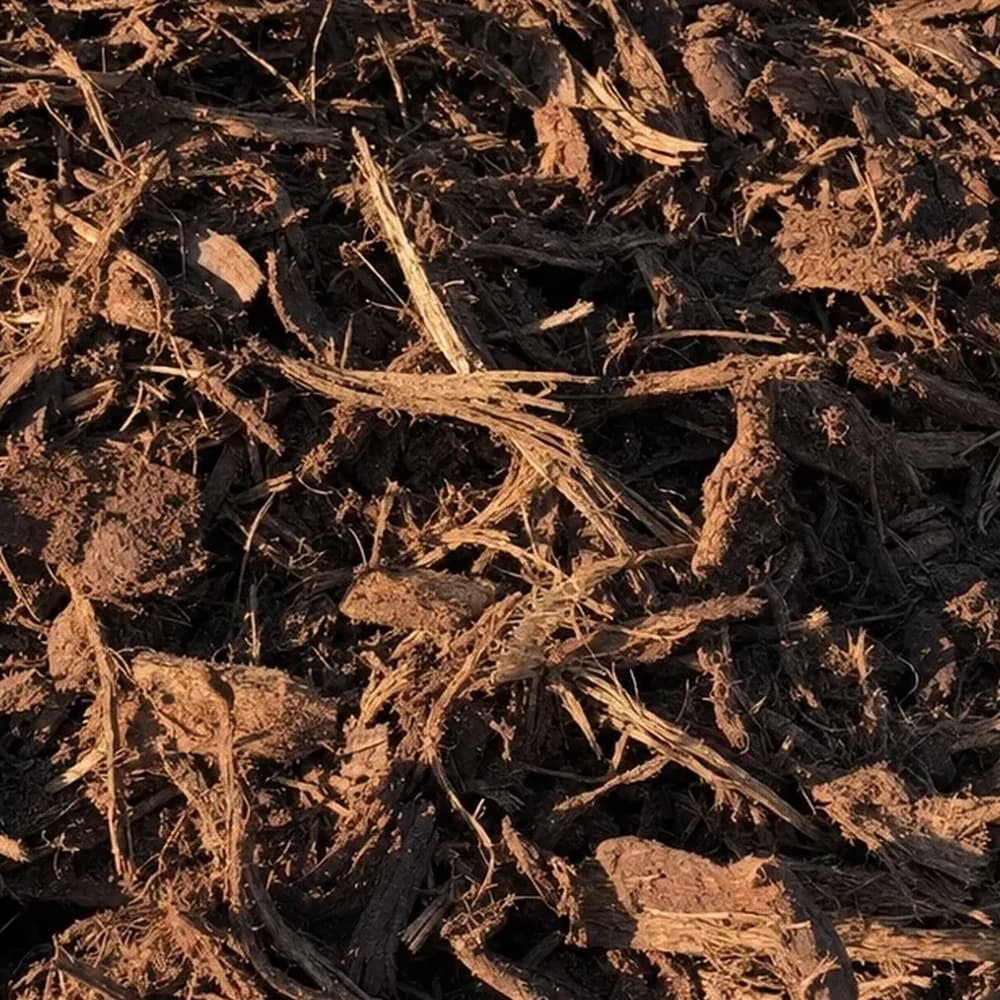
The calculator starts with shredded hardwood. Its fibers lock together, helping it stay put on gentle slopes. Chips and nuggets can remain usable a season or two longer, yet heavy rain can float and scatter them. Dyed mulch breaks down more slowly while retaining its color. All types use identical volume math, so the amount ordered stays unchanged; the appearance and refresh schedule are what vary.
Preparing for delivery
A three-yard mulch load forms a pile about as large as a small car. Make room for a parking spot on the driveway, put down a tarp, and have the load placed there, as shredded mulch may stain new concrete. Get it spread in a week or two. If a large pile sits for a month, heat can build in the middle and sour the material. Allow 30 to 45 minutes of wheelbarrow time per yard, and hold back the last half-yard for those missed beds behind the garage.
Common mulch calculation questions
How many mulch bags make a cubic yard?
How many cubic feet are in one mulch yard?
How much mulch is needed?
What area will one yard of mulch cover?
What is the weight of a mulch yard?
What does one yard of mulch cost?
Will mulch attract termites?
Can fresh mulch be placed over old mulch?
Other calculators
Leave the 27-bag cart behind.
Bulk shredded hardwood sold by the yard, placed on your driveway with free delivery.