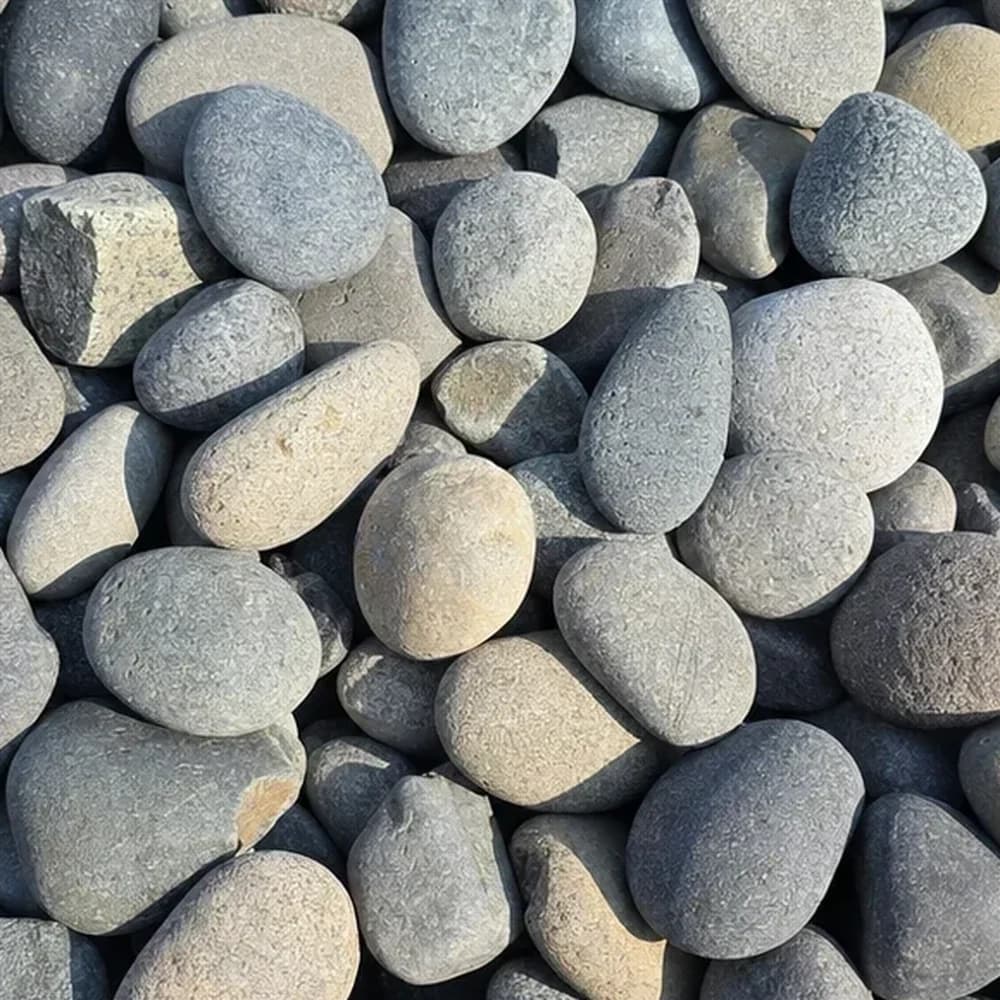
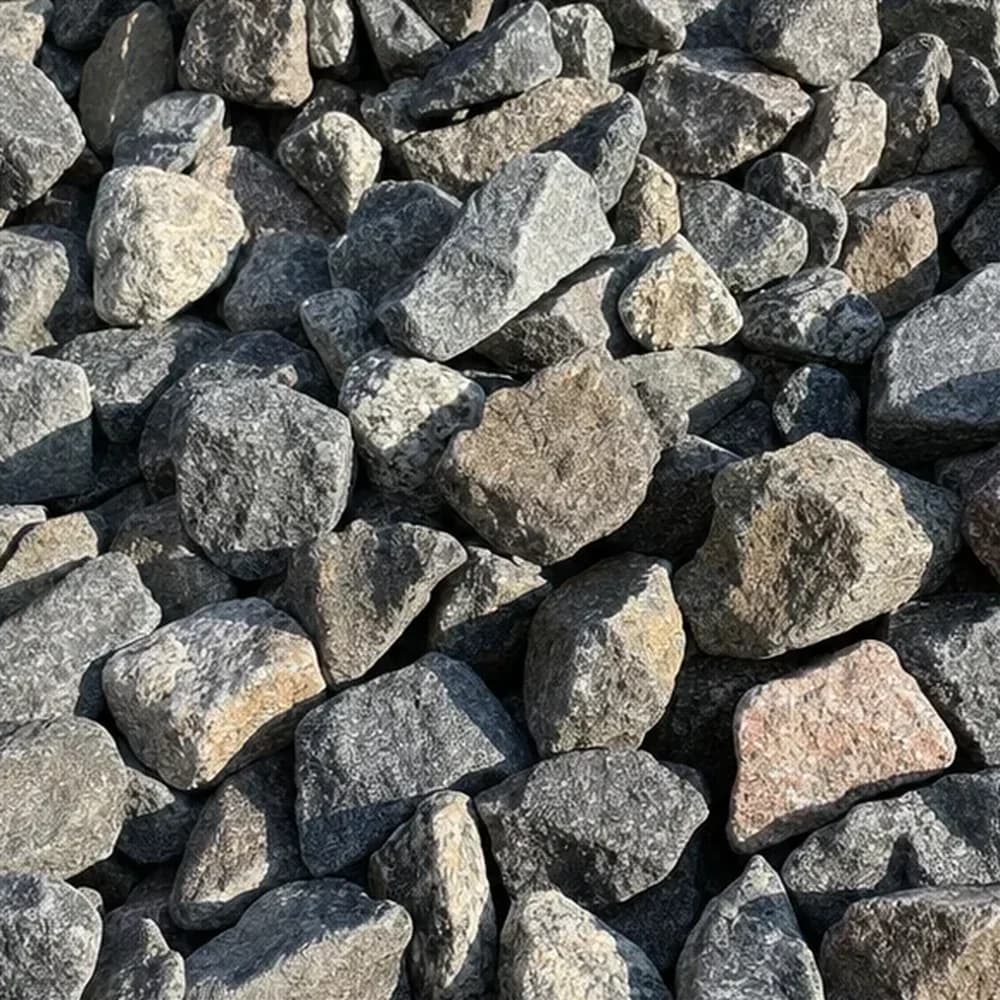
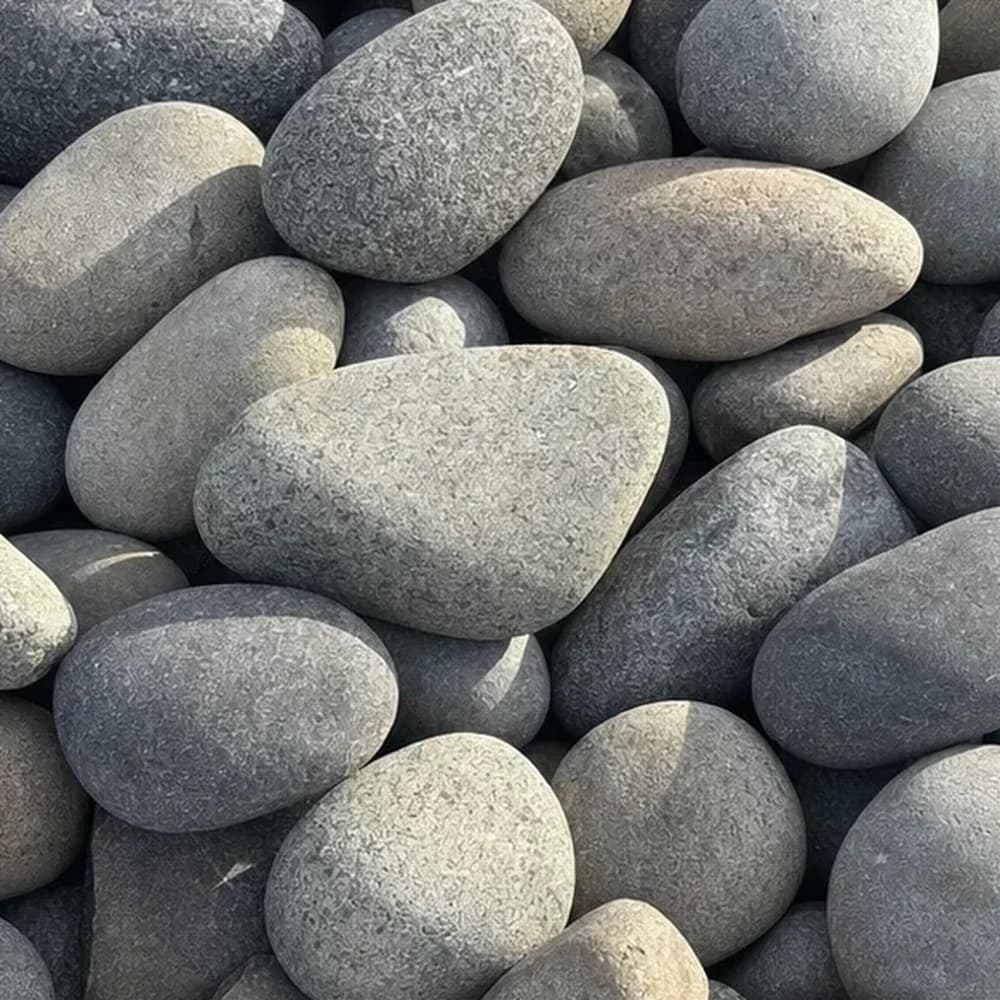
River rock calculator for Hawaii
Coverage changes by rock size: 3-inch material yields half the area per ton compared with 1-inch rock.
Enter your project dimensions
River rock coverage is determined by the stone size. To conceal the ground, install the material at about twice its diameter: 1-inch rock is placed 2 inches deep, while 3-inch rock requires 4 inches or more. The weight is the same, but the coverage is cut in half. Select the stone size and enter the bed dimensions in this river rock calculator for a ton estimate based on river rock at 2,700 lb per cubic yard. Keep in mind that a delivered ton forms only three-quarters of a cubic yard, so a spread bed can appear thinner than expected if the layer is too shallow.
Order sizing
- Record each border and bed in feet, then let multiple-areas mode add the separate spaces together.
- Match depth to roughly twice the stone diameter: 2 inches for 3/4 to 1 inch rock, 3 to 4 inches for 1 to 3 inch rock, and 4 to 5 inches for larger material.
- Convert cubic feet to cubic yards by dividing by 27, then multiply yards × 1.35 for tons.
Per-ton coverage by size
| Stone size | Layer depth | 1 ton covers |
|---|---|---|
| 3/4–1" river rock | 2 inches | ≈ 120 sq ft |
| 1–3" river rock | 3 inches | ≈ 80 sq ft |
| Large river rock (2–4") | 4–5 inches | ≈ 53 sq ft |
| Oversize accents | single layer | 35–50 sq ft |
| Project | Typical size | Depth | Volume | Weight |
|---|---|---|---|---|
| Foundation border | 40 x 3 ft | 3" | 1.1 yd³ | 1.5 tons |
| Dry creek bed | 25 x 4 ft | 4" | 1.2 yd³ | 1.7 tons |
| Accent beds | ≈ 150 sq ft | 2" | 0.9 yd³ | 1.3 tons |
| Downspout splash zones, x4 | 3 x 2 ft each | 3" | 0.2 yd³ | 0.3 tons |
| Front-yard xeriscape | ≈ 600 sq ft | 3" | 5.6 yd³ | 7.5 tons |
Install fabric before rock
Without landscape fabric, rock can gradually settle into the soil while weeds emerge between the stones. After three years, the bed may need more material, a cost that non-woven fabric can avoid for a few dollars per roll. Place and pin the fabric before spreading the rock. For drain rock in an active drainage route, wrap the fabric around the stone rather than laying it beneath it.
Natural-looking rock bed details
- Set a 1-2 inch base, then place larger stones in grouped pockets. A single size across the whole bed can look overly formal.
- Set the largest dry-creek-bed anchor stones into the ground by a third of their depth to create a water-worn placement.
- Hose the rock down once it is spread. Fine dust can mute the color until it is rinsed away.
- At foundations, install a 3 to 4 inch layer over fabric and slope it slightly outward from the wall. The finished surface directs roof runoff along the bed.
- Use a blower at a low setting to remove leaves. A rake can send stones into the grass, where mower blades may strike them.
Example: a 200-square-foot bed
For 1-inch river rock spread 2 inches deep, 200 x 0.167 = 33 cubic feet, or 1.2 cubic yards, which is about 1.7 tons. Order 2 tons. Use the remaining material to make the front border a double layer, since that visible edge tends to thin out first.
Rock and mulch over five years
Mulch costs less per delivery and contributes organic material to the soil, but needs refreshing every year or two. River rock has a higher initial cost and generally keeps the same look into year five. Stone can warm surrounding soil during summer, so mulch is commonly used in planted areas, with rock reserved for borders, drainage lines, and edges. Enter the same dimensions in both calculators to see how the tonnage changes the price difference.
River rock coverage and pricing FAQs
How can I determine the river rock quantity I need?
What area does 1 ton of river rock cover?
What coverage comes from 50 lbs of river rock?
What is the price for a ton of river rock?
What depth is appropriate for river rock?
Is landscape fabric needed beneath river rock?
Can river rock be installed on top of mulch?
What does a cubic yard of river rock weigh?
Other calculators
Rock bed maintenance considerations.
River rock, large river rock, and drain rock are available by the ton with free delivery included.